
Penile prosthetic surgery · Springwood, Brisbane
Penile Implant Surgery.
A penile implant is a surgical treatment for erectile dysfunction that provides penile rigidity using an internal medical device.
Penile implant surgery may be considered when erections remain inadequate despite other treatment, when non-surgical options are unsuitable, or when an informed patient prefers a surgical approach after appropriate assessment.
Southside Urology provides specialist assessment and treatment planning for men considering penile implants, including those with erectile dysfunction after prostate cancer treatment, Peyronie's disease or previous penile surgery.
Understanding the operation
What is a penile implant?
A penile implant, also called a penile prosthesis, is a device surgically placed within the erectile chambers of the penis.
It is designed to provide the firmness required for sexual activity when natural erectile function is no longer sufficient.
The device is completely internal. Different designs create or maintain rigidity in different ways.
A penile implant does not require the natural erection response that is needed for oral erectile dysfunction tablets to work.
Surgery is generally considered after reviewing reasonable non-surgical options and discussing the benefits, limitations and risks.
What does an implant do?
- Provides mechanical penile rigidity
- Is completely implanted within the body
- Does not require an ED injection before each use
- Can be inflatable or malleable in design
- Requires surgery and postoperative recovery
- May eventually require revision or replacement
The device is intended to support rigidity. Sensation, sexual desire, orgasm and ejaculation are separate aspects of sexual function.
Treatment suitability
When might penile implant surgery be considered?
A penile implant may be one option when significant erectile dysfunction continues despite appropriate treatment, or when other options are unsuitable for an individual patient.
Tablets have not worked
Tablets may provide insufficient rigidity, unreliable results or unacceptable side effects. Their previous use and response should be reviewed first.
Injections do not suit you
Penile injection treatment may be ineffective, painful, inconvenient or unacceptable. A surgical option may then be discussed.
ED after prostate cancer treatment
Persistent erectile dysfunction after radical prostatectomy or radiotherapy may lead to implant consideration.
Peyronie's disease with ED
Significant curvature, narrowing or instability together with poor erectile rigidity may affect surgical planning.
Vascular or neurological factors
Diabetes, vascular disease, neurological conditions and other health factors may contribute to severe ED.
An informed surgical decision
Some patients prefer a surgical pathway after understanding alternatives, expectations, irreversibility and device risks.
Assessment should consider the causes of erectile dysfunction, other treatment options, current erectile function, medical health and individual priorities.
Before considering surgery
Where does an implant fit in erectile dysfunction treatment?
Erectile dysfunction can be treated in several ways. The most appropriate option depends on its cause, severity, medical considerations and treatment preferences.
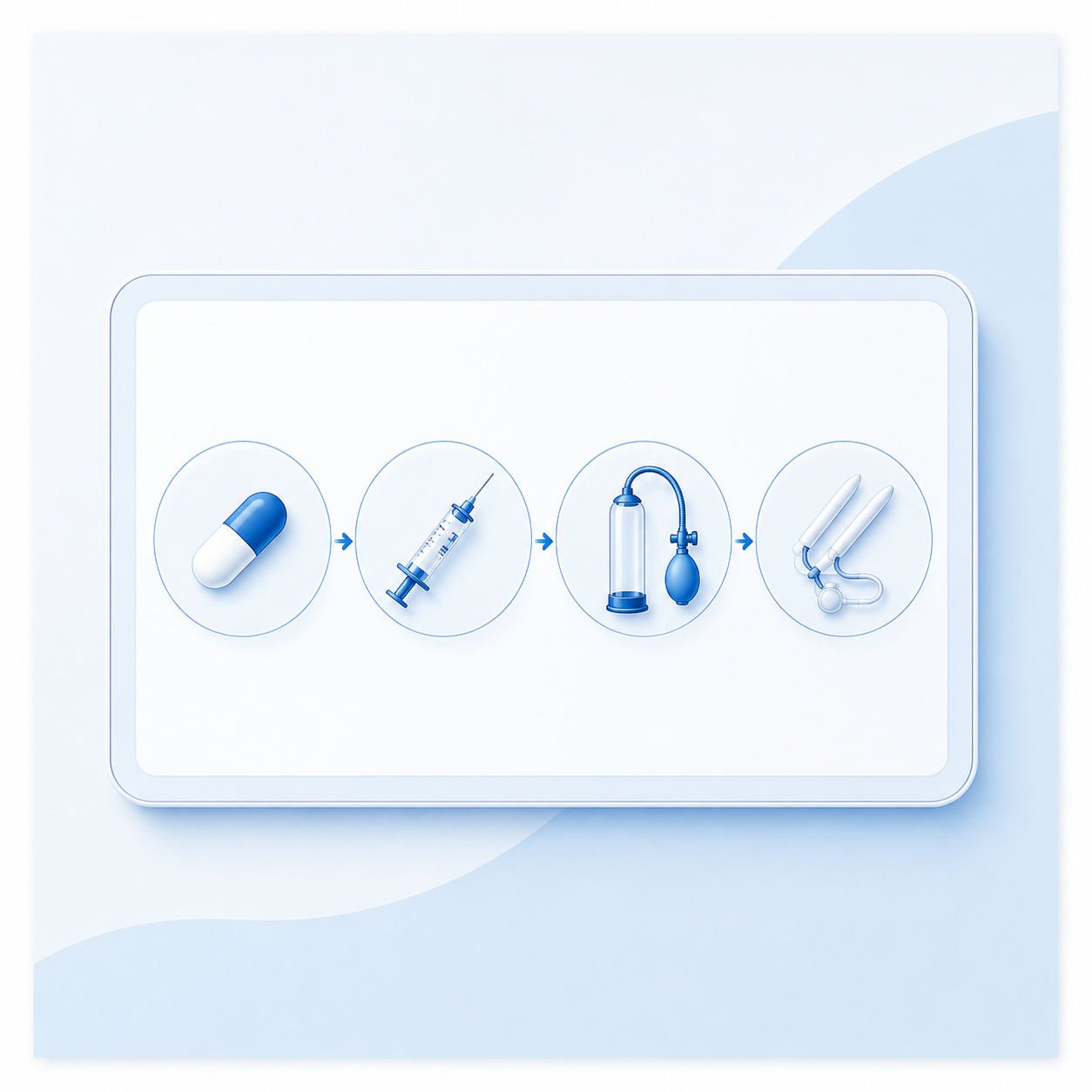
Non-surgical treatments may include oral medicines, vacuum erection devices and penile injections.
A penile implant differs because it is a surgically implanted method of obtaining rigidity.
Not everyone needs to try every treatment in a fixed order. The decision should follow individual assessment and counselling.
Device anatomy
How does a three-piece inflatable penile implant work?
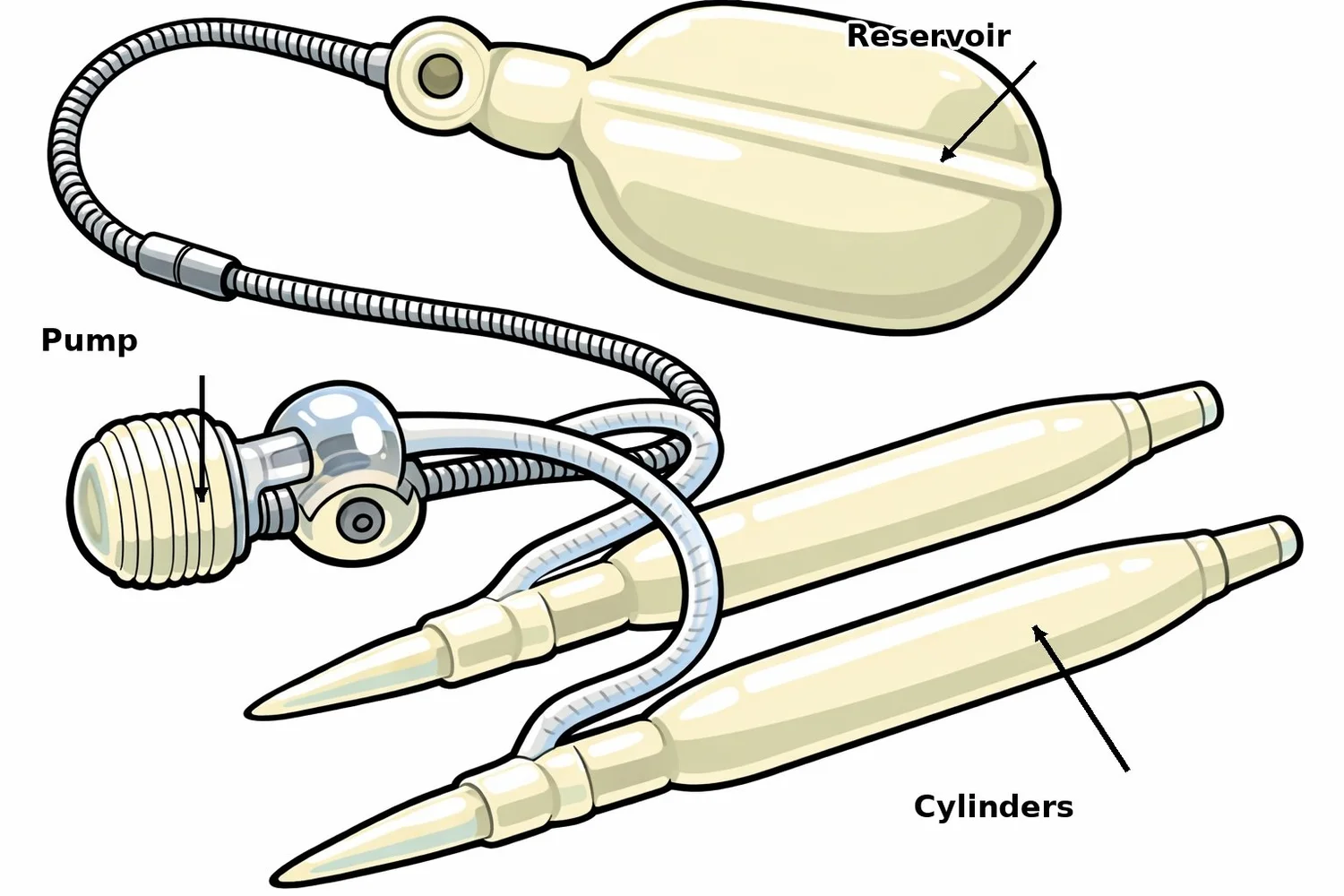
A three-piece inflatable implant contains paired cylinders, a scrotal pump and a fluid reservoir. These components are connected within a closed hydraulic system.
Paired cylinders
Two cylinders are placed within the erectile chambers of the penis.
When fluid is transferred into them, they expand to create rigidity.
Scrotal pump
A pump is placed within the scrotum.
It allows the patient to inflate the system and operate the deflation mechanism.
Fluid reservoir
A reservoir stores fluid while the implant is deflated.
Placement depends on anatomy and can be influenced by previous pelvic, prostate or hernia surgery.
Activating the pump transfers fluid from the reservoir into the cylinders, creating mechanical penile rigidity.
The implant can subsequently be deflated using its release mechanism. Operation varies between device designs, and patients receive practical instruction once healing is sufficient.
Device choices
Inflatable or malleable penile implant?
Both designs provide mechanical rigidity, but they differ in operation, concealability, component placement and practical use. Neither is automatically appropriate for everyone.
Three-piece inflatable implant
Contains two cylinders, a scrotal pump and a fluid reservoir.
- Inflated when rigidity is desired
- Can be deflated afterwards
- Requires adequate hand function to operate the pump
- Includes more implanted mechanical components
- Previous pelvic surgery may influence reservoir placement
A two-piece inflatable system may be considered in selected circumstances.
Malleable penile implant
Contains bendable rods within the erectile chambers of the penis.
- No separate fluid reservoir or scrotal pump
- Simpler mechanical design
- Penis is manually positioned for use or concealment
- Persistent firmness remains between uses
- May suit selected patients with limited manual dexterity
Concealment, appearance and everyday comfort differ from an inflatable system.
Relevant factors include anatomy, penile fibrosis, hand function, previous operations, infection risk, practical preferences and available implant configurations.
No manufacturer or model is recommended or ranked on this page.
Informed expectations
What can a penile implant realistically achieve?
Understanding the difference between penile rigidity, sensation, orgasm and natural erectile function is important before surgery.
The implant is designed to provide mechanical rigidity for sexual activity.
Surgery does not guarantee an increase in penile length or restoration of previous erectile dimensions.
Implantation does not directly restore penile sensation. Sensory outcomes vary with existing health and surgery.
Orgasm may remain possible, but an implant does not treat every cause of orgasmic difficulty.
Implant cylinders create shaft rigidity. The glans may not become firm in the same way as during a natural erection.
Implants are mechanical devices. Revision, replacement or removal may become necessary.
Individual surgical planning
When might implant surgery be more complex?
Previous operations, scarring and associated penile conditions can influence implant sizing, component position and the risks of surgery.
After prostatectomy
Previous radical prostatectomy or other pelvic surgery may change the anatomy relevant to reservoir placement.
Peyronie's disease
Curvature, narrowing and hourglass deformity may require additional planning beyond cylinder placement.
Corporal fibrosis
Severe scarring following priapism, previous surgery or infection may affect corporal dilation and sizing.
Revision surgery
A previous prosthesis may have altered anatomy, created scar tissue or changed future surgical options.
Diabetes and other conditions
Diabetes, smoking, active infection and other medical factors may influence wound healing and complication risk.
Other urological devices
Previous continence surgery, urinary prostheses and complex urinary conditions may require coordinated planning.
Before surgery
What is assessed before penile implant surgery?
Preoperative assessment aims to establish whether the implant is appropriate and identify factors that may affect surgery and recovery.
Your clinician may review erectile dysfunction severity, previous treatment response, penile anatomy, general health and previous pelvic operations.
Medical optimisation may include reviewing diabetes management, smoking, medication use and active infections.
Implant sizing is based on anatomical measurements, including measurements made during surgery. It cannot be reliably predicted by a website calculator.
Topics to discuss before surgery
- Current erections and previous ED treatments
- Penile length, shape and scarring
- Previous abdominal, pelvic or penile surgery
- Hand function and pump operation
- Current infection risks and medical conditions
- Medications, including anticoagulants
- Recovery and activity restrictions
- Costs, device limitations and possible future revision
The procedure
What happens during penile implant surgery?
The procedure is performed in an operating theatre under anaesthesia. The technique and components depend on the surgical plan.
Anaesthesia & preparation
The patient is prepared for surgery using infection-prevention measures, anaesthesia and appropriate antibiotic prophylaxis.
Corporal preparation
The erectile chambers are accessed and prepared for implant placement. Measurements help determine appropriate sizing.
Component placement
Cylinders are positioned within the erectile bodies. Inflatable systems also require pump placement and, where applicable, reservoir placement.
Testing & closure
The device is checked, the wound is closed, and postoperative dressings or drainage are arranged as indicated.
Surgical incision, component positioning, hospital stay and postoperative instructions can differ, particularly in revision surgery or when significant scarring is present.
Recovery and device activation
What is recovery like after penile implant surgery?
Recovery is gradual. Initial priorities include wound healing, pain control, reducing swelling and following activity restrictions.
First days after surgery
Some swelling, bruising and discomfort are expected. Follow the individual dressing, hygiene, medication and activity instructions provided.
First several weeks
Wounds and swelling are reviewed. Heavy exercise, lifting and sexual activity may be restricted while healing continues.
Activation and cycling
Once healing is sufficient, patients with inflatable implants are taught how to inflate and deflate their device.
Activation is often discussed around four to six weeks, but the exact timing varies.
Sexual activity should only resume when the treating surgeon confirms that healing and device instruction are sufficient.
Do not attempt early intercourse or operate an inflatable device against the specific instructions provided by your surgical team.
Informed surgical consent
What are the possible complications of penile implants?
Penile implantation has surgical and device-related risks. The probability and consequences depend on health, anatomy, previous surgery and the specific procedure.
Infection
Infection can involve the implanted device. Treatment may require antibiotics and removal or replacement of components.
Bleeding or haematoma
Bleeding, bruising and scrotal swelling can occur. More significant collections occasionally require additional management.
Mechanical malfunction
Components can fail, leak or become difficult to operate. Revision or replacement surgery may become necessary.
Erosion or tissue injury
Implant components may damage or erode through surrounding tissues in uncommon cases.
Positioning or sizing problems
Unfavourable component position, unexpected appearance, asymmetry or discomfort may require assessment.
Persistent pain or dissatisfaction
Pain, altered sensation, difficulty using the pump or unmet size and appearance expectations may occur.
Implantation involves lasting changes to the erectile tissue. Although devices can be removed or replaced, the procedure should not be considered readily reversible.
The implant does not have a guaranteed lifetime. Future revision or replacement may be required.
Warning signs after implant surgery
Increasing redness, warmth, fever, wound discharge, worsening pain, new skin breakdown or exposed implant material require prompt medical assessment.
Contact your treating surgical team urgently for concerning postoperative symptoms. If you are seriously unwell, unable to pass urine or require immediate treatment, attend an emergency department.
Call 000 for a life-threatening emergency. Routine appointment requests are not an emergency service.
Existing penile implants
What if an existing penile implant develops a problem?
Penile implants can require reassessment because of mechanical failure, pump difficulties, abnormal component position, pain or suspected infection.
Revision surgery differs from primary implantation because existing components and scar tissue can change the available surgical options.
Previous infection, implant removal and corporal fibrosis can make surgery more complex.
It is helpful to provide previous operative reports, the implant identification record and any relevant infection or revision history.
Reasons for revision assessment
- Loss of implant rigidity
- Difficulty inflating or deflating
- Pump or cylinder positioning concerns
- New or persistent pain
- Suspected implant erosion or infection
- Problems following previous revision surgery
New redness, wound breakdown, fever or exposed implant material should be assessed urgently rather than through a routine booking.
Practical planning
Costs, hospital arrangements and planning for surgery.
Private penile implant surgery can involve several separate expenses and arrangements. These should be clarified before deciding to proceed.
Surgical costs
Costs may include the surgeon, anaesthetist, hospital and implanted device. Applicable insurance cover, exclusions and excesses vary between patients.
Where surgery takes place
Springwood is the specialist consulting location. Surgery is arranged separately at an appropriate hospital or surgical facility.
Time away from activities
Work, driving, travel, exercise and sexual activity restrictions depend on recovery and the surgeon's instructions.
The appropriate implant, hospital arrangements and funding pathway need to be confirmed before reliable personal costs can be provided.
Specialist assessment
What happens at a penile implant consultation?
Assessment is intended to clarify the erectile problem, review previous treatment and establish whether surgery is a reasonable option.
History
Review the erectile dysfunction, medical history, previous treatments and personal priorities.
Examination
Assess relevant penile anatomy, curvature, scarring and any previous surgical changes.
Options
Discuss non-surgical alternatives and differences between implant designs.
Planning
Review realistic outcomes, risks, recovery, costs and potential next steps.
What should patients bring?
- GP or specialist referral
- Previous erectile dysfunction treatment details
- Current medications
- Relevant medical and surgical history
- Previous pelvic or penile operative reports
- Previous implant records, if applicable
- Relevant investigations already available
- A list of questions
Information for referring GPs
Useful referral information includes ED duration and severity, prior oral and injection treatment, relevant medical conditions and previous pelvic surgery.
Please include any known Peyronie's disease, penile fibrosis, prior prosthesis or reconstructive surgery.
Patients with suspected prosthetic infection require prompt medical assessment, not routine elective referral.
GP Referral Information →Specialist care
Dr Jack Crozier.
Urologist & Andrologist
FRACS (Urology)
Dr Crozier completed Australian urology specialist training, followed by advanced fellowship training at Princess Alexandra Hospital in Brisbane and University College London Hospitals.
His London andrology fellowship included exposure to penile prosthetic surgery, complex penile reconstruction and Peyronie's disease surgery.
His practice includes assessment of severe erectile dysfunction, implant suitability, complex penile anatomy and problems after previous penile treatment.
Clinical considerations
- Primary penile implant assessment
- Erectile dysfunction after prostate cancer treatment
- Peyronie's disease with erectile dysfunction
- Penile fibrosis and altered anatomy
- Previous implant or penile surgery
- Individual surgical and reconstructive planning
The appropriate treatment, procedure and hospital arrangements are determined after individual assessment.
Common questions
Penile implant FAQs.
How does a penile implant work?
A penile implant creates mechanical rigidity using components placed within the erectile chambers. An inflatable system uses a pump to transfer fluid into the cylinders, while a malleable system uses positionable rods.
Is a penile implant visible?
Components are implanted within the body. An inflatable implant can be deflated when not in use. Visibility, appearance and concealment depend on anatomy and implant design.
Can an implant restore a natural erection?
No. An implant provides rigidity mechanically. It does not restore the original erectile blood-flow or nerve response.
Will a penile implant make the penis longer?
Penile implants are not designed to increase length. The postoperative dimensions depend on pre-existing anatomy, scarring, fibrosis and surgical measurements. Previous natural erectile length may not be fully restored.
Can I still have an orgasm?
Orgasm can remain possible after implant surgery, but the implant does not directly treat disorders of sexual desire, sensation or orgasm. Outcomes depend on existing sexual function and underlying conditions.
Does a penile implant affect ejaculation?
The implant itself is designed to provide rigidity, not change ejaculation. However, previous prostate surgery, neurological conditions or other health factors may already affect ejaculation.
Does the glans become hard?
Implant cylinders provide shaft rigidity. The glans is not directly inflated by the cylinders. Glans fullness can differ from a natural erection.
Which is better: inflatable or malleable?
Neither design is best for every patient. Inflatable systems offer inflation and deflation, while malleable devices have a simpler mechanism and persistent firmness. Anatomy, hand function, previous surgery and preferences influence suitability.
How long does a penile implant last?
There is no guaranteed device lifespan. Mechanical problems and tissue-related complications may develop over time, and some implants eventually require revision or replacement.
Is penile implant surgery reversible?
It should be regarded as a lasting surgical change to the erectile tissue. A device can sometimes be removed or replaced, but removal does not reliably restore natural erectile function.
Can I have an implant after radical prostatectomy?
Penile implant surgery may be considered for persistent erectile dysfunction after prostatectomy. Previous pelvic surgery can change the planning for certain components, particularly the reservoir.
Can a penile implant treat Peyronie's disease?
In men with significant erectile dysfunction and Peyronie's disease, an implant can provide rigidity. Additional techniques may be needed to address residual curvature or complex deformity. Implantation is not automatically appropriate for Peyronie's disease when erections remain adequate.
How painful is recovery?
Pain, bruising and swelling are expected during early recovery, but the severity varies. Pain relief and activity advice are provided individually. Worsening rather than improving pain should prompt reassessment.
When can I start using the implant?
Inflatable devices are generally activated after sufficient healing, often around four to six weeks, although this varies by surgeon, procedure and recovery. Follow your individual instructions.
Can I have sex after implant surgery?
Many patients undergo implant surgery with the aim of achieving rigidity for sexual activity. Intercourse should only resume after healing and clearance by the treating surgeon. The experience may differ from natural erections.
What if the implant stops working?
Loss of rigidity or difficulty operating a device may result from mechanical or other problems. Specialist assessment can help determine whether troubleshooting, investigation or revision is required.
Can infection require removal of the device?
Yes. Implant-associated infection can be serious. Management may involve antibiotics and surgical removal or replacement of components, depending on the circumstances.
How much does penile implant surgery cost?
Costs depend on the selected procedure, hospital, implant, anaesthesia and applicable insurance arrangements. An individual written estimate should be obtained before surgery.
Southside Urology resources
Related men's urology information.
Southside Urology · Springwood
Considering penile implant surgery for erectile dysfunction?
Specialist assessment can help determine whether surgery is appropriate, compare implant designs and explain the risks, recovery and realistic outcomes.
Previous erectile dysfunction treatment, penile anatomy, prior surgery and individual priorities all form part of planning.
Southside Urology
Suite 7, 2 Murrajong Road
Springwood QLD 4127
Phone: 07 3106 0379
Referral fax: 07 3036 6621
Online appointment requests are not confirmed bookings. Please select Springwood when arranging a Southside Urology consultation.
Medical information notice: This page provides general educational information about surgically implanted medical devices. It is not individual medical advice, a device recommendation or a substitute for informed surgical consent.
Implant selection, availability, regulatory status, benefits, risks and procedural suitability require individual specialist assessment. No manufacturer or model is endorsed.