
Male reproductive medicine · Brisbane
Male Infertility & Reproductive Urology.
Difficulty conceiving can involve sperm production, sperm quality, reproductive hormones, reproductive tract obstruction or more than one factor.
Male infertility assessment aims to identify the underlying cause, recognise potentially treatable conditions and determine which reproductive options are appropriate.
Southside Urology provides specialist evaluation of abnormal semen analyses, low sperm count, azoospermia, varicocele, fertility after vasectomy or testosterone, and selected reproductive surgical conditions.
Results need to be interpreted alongside the reproductive history, clinical examination and fertility circumstances of both partners.
Understanding fertility
What is male infertility?
Infertility is commonly defined as difficulty achieving pregnancy after 12 months of regular, unprotected intercourse.
Male factors can contribute to a couple's difficulty conceiving through reduced sperm production, abnormal sperm movement, reproductive tract obstruction, hormonal problems or difficulties with ejaculation.
Male fertility and female fertility should usually be assessed together. The reproductive circumstances of both partners influence the most appropriate plan.
An individual semen measurement cannot, by itself, establish whether pregnancy is possible or impossible.
When should the male partner be assessed?
- After approximately 12 months without pregnancy
- Earlier when the egg-providing partner is older or time is a concern
- After an abnormal semen analysis
- When a test shows very few or no sperm
- After previous vasectomy or reproductive surgery
- Following testosterone, anabolic steroid or cancer treatment exposure
- When there is a history of undescended testes, testicular injury or relevant genetic conditions
Earlier assessment is reasonable when a known male reproductive problem is already present.
Understanding the first test
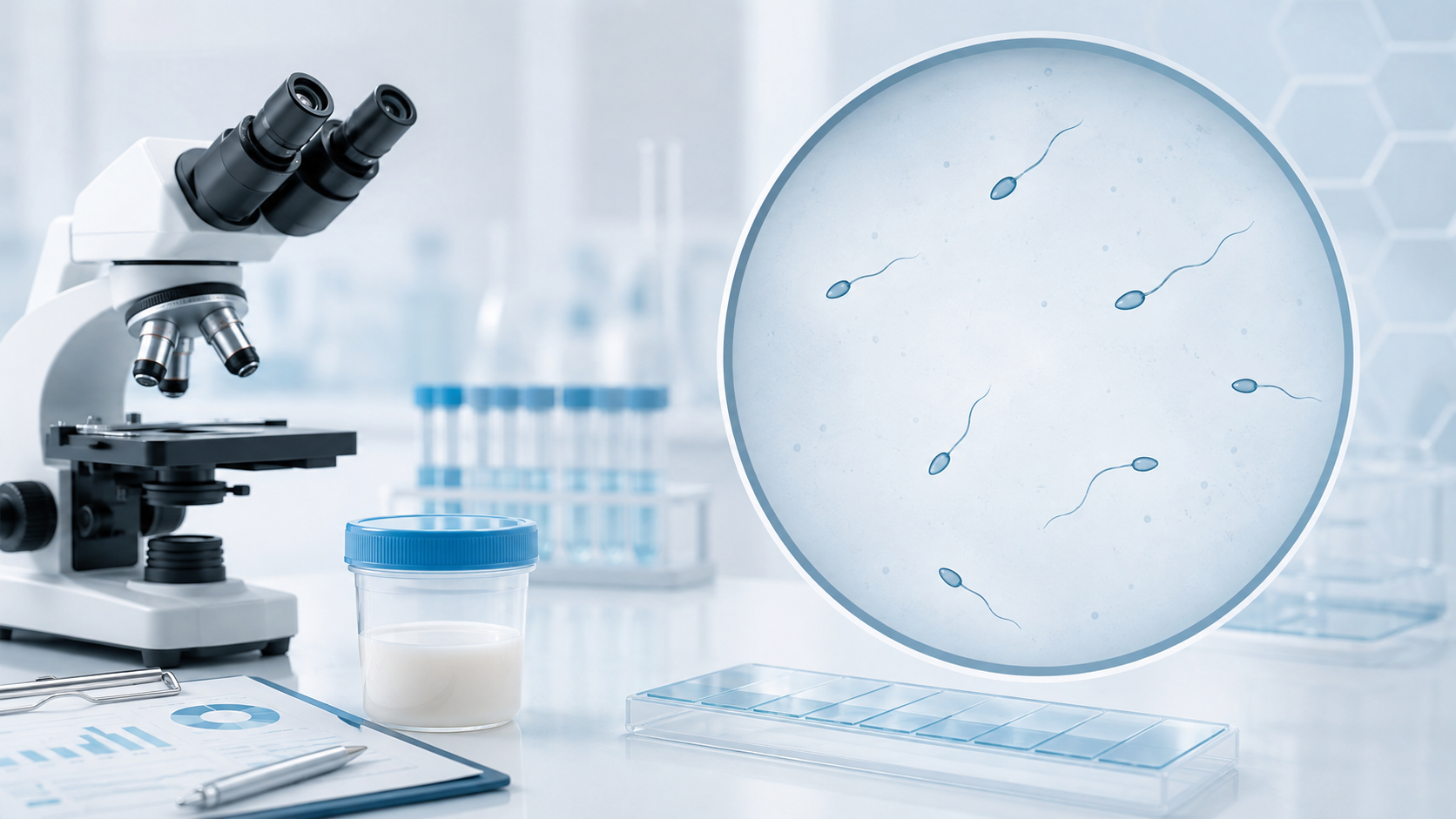
What does a semen analysis measure?
Semen analysis examines several characteristics of an ejaculate. The complete pattern is more informative than any one number.
Sperm concentration
The number of sperm in each millilitre of semen.
A low concentration does not necessarily establish the total number of sperm available.
Semen volume
The amount of fluid collected during ejaculation.
Volume is needed to calculate the total sperm number in the ejaculate.
Sperm motility
The proportion of sperm showing movement.
Progressive motility describes sperm moving forward rather than simply moving in place.
Sperm morphology
The proportion of sperm meeting strict laboratory appearance criteria.
Abnormal morphology should not be interpreted in isolation.
Total sperm number
The estimated number of sperm in the entire ejaculate.
It reflects both concentration and semen volume.
Other semen characteristics
Depending on the laboratory, results may include pH, vitality, white blood cells or other measurements.
Their relevance depends on the clinical situation.
Semen parameters naturally vary. Fever, illness, incomplete sample collection, abstinence interval, laboratory variation and other factors can change results.
When an analysis is abnormal, repeat testing is generally recommended. Severe abnormalities, including azoospermia, should be reviewed and confirmed without unnecessary delay.
Laboratory reference information
Common WHO semen reference values.
The following figures are lower fifth-percentile reference values from the WHO 2021 semen laboratory manual. They are not pass-or-fail thresholds for fertility.
Lower reference value for sperm concentration.
Per complete ejaculate.
Sperm moving progressively.
Strict morphology criteria.
Men with results below a reference value may still contribute to spontaneous pregnancy. Men with results above these values may still experience infertility.
The total semen pattern, medical history and reproductive circumstances of both partners are important.
Other WHO lower reference values include semen volume of 1.4 mL and total motility of 42%.
Understanding the terminology
What do abnormal semen analysis results mean?
Laboratory reports may contain unfamiliar terms. These describe semen patterns rather than establishing a single underlying diagnosis.
Oligozoospermia
Low sperm concentration. The severity can range from mild to very severe.
Azoospermia
No sperm identified in the ejaculate. Further assessment distinguishes impaired production from obstruction.
Cryptozoospermia
Extremely rare sperm may be identified only after concentrating and examining the sample.
Asthenozoospermia
Reduced sperm movement, particularly progressive movement.
Teratozoospermia
A reduced proportion of sperm meeting strict morphology criteria.
Oligoasthenoteratozoospermia
Also called OAT. A combined pattern of low concentration, reduced motility and abnormal morphology.
Understanding the cause
What can cause male infertility?
Male fertility may be affected at different stages of sperm production, transport or ejaculation. More than one mechanism may be present.
Four parts of the male fertility pathway
The testicles may produce reduced numbers of sperm or none that reach the ejaculate.
An obstruction or absent reproductive structure may prevent sperm reaching the semen.
Ejaculatory or neurological problems may affect the delivery of semen.
Numbers, motility and other sperm factors may influence the reproductive pathway.
Testicular conditions
Previous undescended testes, testicular injury, certain genetic conditions, testicular failure and cancer treatment may impair sperm production.
Hormonal abnormalities
Disorders affecting reproductive hormone signalling can reduce sperm production.
Testosterone or anabolic steroid use can suppress sperm production.
Reproductive tract obstruction
Previous vasectomy, epididymal blockage, congenital absence of the vas deferens and selected ejaculatory duct problems can prevent sperm reaching the ejaculate.
Varicocele
Enlarged veins around the testicle are associated with impaired semen quality in some men.
Many varicoceles do not require treatment.
Ejaculatory difficulties
Retrograde ejaculation, anejaculation, neurological conditions and certain medications may prevent normal semen delivery.
Unexplained abnormalities
Sometimes no single cause is identified despite appropriate clinical examination and investigations.
Specialist fertility assessment
How is male infertility investigated?
The investigations needed depend on the semen pattern, reproductive history, medical background and clinical examination.
Reproductive history
Previous pregnancies, duration of fertility attempts, timing of intercourse, previous fertility treatment and reproductive goals.
Medical and surgical history
Review childhood testicular conditions, previous surgery, infections, medications, testosterone exposure, chemotherapy and other relevant health factors.
Clinical examination
Assessment may include testicular size, epididymides, vas deferens, signs of a varicocele and relevant genital findings.
Repeat semen analysis
Abnormal semen results commonly require confirmation. The timing depends on the severity and possible contributing factors.
Reproductive hormones
FSH, LH and testosterone can help evaluate reproductive hormone signalling and testicular function.
Additional tests are selected when indicated.
Genetics and imaging
Karyotype, Y-chromosome microdeletion testing, CFTR testing or ultrasound may be relevant in selected situations.
No. Genetic assessment is especially relevant in selected cases of azoospermia, very low sperm concentration or suspected congenital reproductive tract abnormalities.
Testing is guided by the full clinical picture. Genetic counselling may be appropriate when an inherited finding is identified.
When no sperm are identified
What happens if the semen analysis shows azoospermia?
Azoospermia means no sperm are identified in the ejaculate after appropriate laboratory examination.
The diagnosis should be confirmed, including careful assessment of a concentrated semen sample, because extremely rare sperm may occasionally be identified.
The next step is to distinguish between obstructive and non-obstructive azoospermia.
These are different reproductive problems, often with different treatment options.
Two important patterns
Obstructive azoospermia
Sperm production may be relatively preserved, but sperm cannot pass through the reproductive tract into the ejaculate.
Non-obstructive azoospermia
Sperm production in the testicle is severely impaired. Small areas of sperm production may nevertheless remain in some patients.
Examination, hormones, semen findings, genetics and selected imaging help distinguish these patterns.
Not necessarily. Some men have a treatable obstruction or hormone problem. Others may have sperm available through surgical retrieval.
However, sperm retrieval is not successful in every patient, and some genetic findings substantially alter the available options.
Azoospermia requires a diagnosis before a reproductive procedure is selected.
Treatment planning
Can male infertility be treated?
Treatment depends on the identified reproductive problem. Some causes are potentially reversible, while others may require assisted reproduction or surgical sperm retrieval.
Treat an identified hormonal problem
Selected hormonal conditions can impair sperm production and may be treatable.
The treatment depends on the endocrine diagnosis. Testosterone replacement is generally unsuitable when preserving sperm production is an immediate goal.
Address relevant lifestyle factors
Smoking cessation, weight management, reducing excessive alcohol, avoiding anabolic steroids and improving general health may be helpful.
The potential benefit depends on the underlying fertility problem and cannot be guaranteed.
Reconstruct a blocked sperm pathway
Selected obstructive conditions may be treated using reproductive microsurgery.
Examples include vasectomy reversal and selected epididymal reconstruction.
Assess a clinically significant varicocele
Varicocele repair may be considered in selected men with infertility, an examination-detectable varicocele and abnormal semen parameters.
A small varicocele seen only on ultrasound is not, by itself, an indication for repair.
Evidence for routine antioxidant supplements is inconsistent. Some products may change laboratory measurements, but reliable improvement in live-birth outcomes has not been established for routine use.
Supplements should not delay investigation of significant male-factor infertility.
Reproductive surgery
What surgical procedures are used in male infertility?
Reproductive surgery may restore sperm transport, address an identified fertility-related condition, or retrieve sperm for assisted reproduction.
Vasectomy reversal
Microsurgical reconnection of the sperm pathway following vasectomy.
The required procedure may be vasovasostomy or epididymovasostomy, depending on the findings.
Microsurgical varicocele repair
Selected abnormal veins are divided under magnification, while important arterial and lymphatic structures are preserved.
Fertility benefit varies between patients.
PESA, TESA and TESE
Different techniques obtain sperm from the epididymis or testicle for use with assisted reproduction.
Selection depends on the male diagnosis.
Non-obstructive azoospermia
What is microTESE?
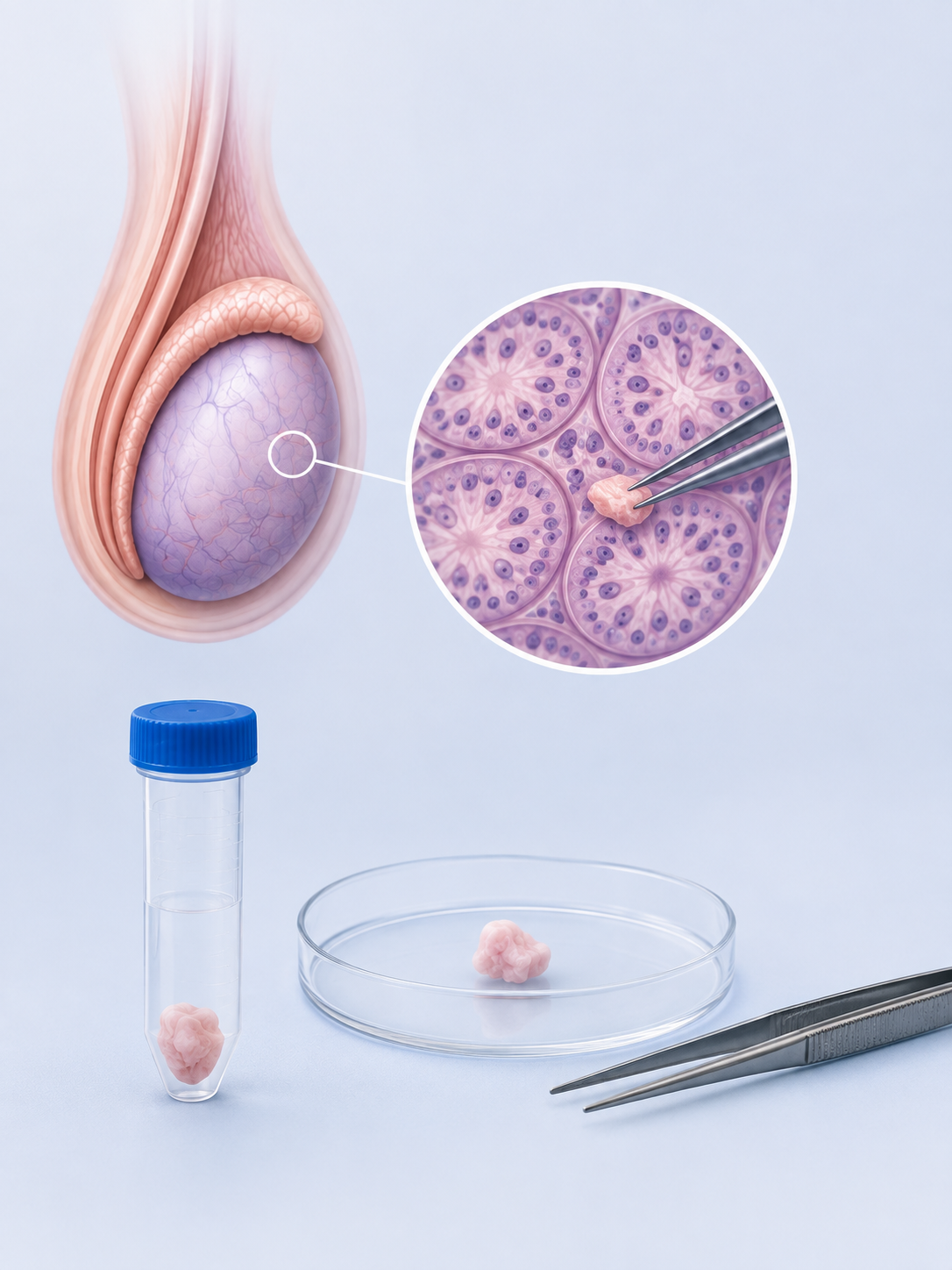
MicroTESE is a microsurgical technique used to search for sperm in selected men with severely impaired testicular sperm production.
The surgeon uses an operating microscope to examine testicular tissue and identify tubules that may contain focal sperm production.
Tissue samples are examined by a fertility laboratory to determine whether usable sperm can be identified.
If sperm are found, they may be suitable for use with ICSI, depending on laboratory findings and the reproductive plan.
MicroTESE is not required for every case of azoospermia. It is principally considered for non-obstructive azoospermia after appropriate assessment.
No. FSH can help assess testicular function, but it cannot reliably determine whether small areas of sperm production remain.
Individual retrieval outcomes vary and cannot be guaranteed.
Couple-based reproductive planning
Vasectomy reversal, sperm retrieval or IVF/ICSI?
Different pathways can be appropriate for different couples. The decision should consider the male diagnosis and the fertility circumstances of the person providing eggs.
Microsurgical vasectomy reversal
Reversal attempts to restore sperm passage into the ejaculate.
- May permit attempts at natural conception
- Can be relevant when more than one child is desired
- Requires consideration of time since vasectomy
- Sperm return and pregnancy are not guaranteed
Sperm retrieval with IVF/ICSI
Sperm may be obtained from the epididymis or testicle and used in conjunction with assisted reproduction.
- Bypasses the need to restore normal sperm transport
- May be useful when IVF is already indicated for another reason
- Requires laboratory and fertility-clinic coordination
- Retrieval and pregnancy outcomes cannot be guaranteed
They can be complementary. The appropriate plan depends on the fertility diagnosis, age and ovarian reserve of the egg-providing partner, previous fertility treatment, timing and family-building goals.
Where sperm retrieval is planned, it should be coordinated with the fertility specialist and embryology laboratory.
Important hormonal consideration
Can testosterone treatment reduce sperm production?
Yes. Testosterone replacement and anabolic androgenic steroids can suppress the hormonal signalling needed for testicular sperm production.
This may result in very low sperm counts or azoospermia.
Recovery after stopping exposure varies and may take months or longer. Some patients require further hormonal assessment or treatment.
Men planning a pregnancy should discuss the fertility implications of testosterone treatment with their prescriber.
Points to review
- Current testosterone prescriptions
- Previous anabolic steroid exposure
- Duration and timing of treatment
- Current reproductive hormone results
- Previous semen analyses
- Desired fertility timeframe
Do not alter prescribed treatment without discussing the plan with the treating clinician.
Advanced fertility investigation
Do I need sperm DNA fragmentation testing?
Standard semen analysis does not directly measure DNA damage within sperm.
Sperm DNA fragmentation testing may be considered in selected reproductive circumstances, including recurrent pregnancy loss or previous unsuccessful assisted reproduction.
It is not necessarily useful as a routine first-line test for every man with an abnormal semen analysis.
The test should be considered when the result may meaningfully influence further investigation or treatment decisions.
Other reasons for specialist fertility review
- Recurrent miscarriage or pregnancy loss
- Repeated unsuccessful fertility treatment
- Severe sperm abnormalities
- Persistent azoospermia
- Complex genetic findings
- Fertility after chemotherapy or radiotherapy
- Fertility following spinal cord injury or ejaculation disorders
Specialist consultation
What happens at a male fertility appointment?
The aim is to understand the fertility problem before deciding whether additional testing, treatment or assisted reproduction is appropriate.
Review results
Existing semen analyses, hormones, previous reproductive treatments and relevant reports are reviewed.
Clinical assessment
Reproductive, medical and surgical history is discussed, with examination where appropriate.
Identify the cause
Consider whether the problem relates to sperm production, transport, hormones or ejaculation.
Plan next steps
Discuss additional testing, observation, medical treatment, microsurgery or assisted reproduction.
What should you bring?
- GP or specialist referral
- All previous semen analyses
- FSH, LH and testosterone results if available
- Previous genetic test reports
- Relevant scrotal ultrasound or other imaging
- IVF and embryology records
- Previous vasectomy, sperm retrieval or fertility surgery reports
- Current medications and supplement list
Information for referring GPs
Male reproductive urology assessment is particularly relevant for azoospermia, severe oligozoospermia, suspected obstruction, hormonal suppression, fertility after vasectomy and suspected genetic male-factor infertility.
Please include original semen reports, relevant reproductive hormone results, previous procedures and the couple's reproductive timeframe.
Severe abnormalities and time-sensitive reproductive circumstances should be identified in the referral.
GP Referral Information →Specialist male reproductive care
Dr Jack Crozier.
Urologist & Andrologist
FRACS (Urology)
Dr Crozier completed Australian urology specialist training followed by advanced fellowship training at Princess Alexandra Hospital in Brisbane and University College London Hospitals.
His London andrology fellowship included experience in male reproductive medicine, sperm retrieval and reproductive microsurgery.
His clinical practice includes assessment of severe male infertility, azoospermia, varicocele, previous vasectomy and selected fertility-related surgical conditions.
Male fertility areas of care
- Abnormal semen analysis
- Severe low sperm count
- Obstructive and non-obstructive azoospermia
- Male infertility genetics
- Varicocele assessment and microsurgery
- Fertility after testosterone treatment
- Vasectomy reversal and reproductive reconstruction
- Sperm retrieval and microTESE assessment
- Coordination with fertility and IVF services
Treatment suitability and procedural arrangements are determined after individual assessment.
Common questions
Male infertility FAQs.
What is the most common first test for male infertility?
Semen analysis is usually the starting investigation. It measures concentration, total sperm number, motility, morphology and semen volume. Clinical history and examination remain important.
Does a low sperm count mean I cannot conceive naturally?
No. Natural conception may still occur with a low sperm count. The likelihood depends on the degree of sperm impairment and the fertility circumstances of both partners.
Why should I repeat my semen analysis?
Sperm parameters can change between tests. Repeat testing helps confirm whether the abnormality is persistent. The timing depends on the severity, possible recent illness and reproductive circumstances.
What does azoospermia mean?
Azoospermia means no sperm are identified in the ejaculate. A repeat analysis with appropriate laboratory examination is important before deciding on further treatment.
Can sperm still be found when my semen contains none?
Sometimes. Men with an obstruction may still produce sperm within the testicles. Selected men with impaired sperm production may have focal sperm production accessible through surgical retrieval. Success is not guaranteed.
Does a high FSH mean microTESE will fail?
No. High FSH can suggest impaired sperm production, but it does not reliably predict whether sperm can be retrieved. Genetic and clinical findings are also relevant.
Can testosterone replacement cause infertility?
Yes. External testosterone can suppress the hormonal stimulation needed for sperm production. Some men develop very low sperm counts or azoospermia. Recovery and treatment should be discussed with an appropriate clinician.
Does every varicocele require surgery?
No. Many men with varicoceles are fertile. Treatment may be considered when a clinical varicocele is associated with relevant semen impairment and infertility. A small ultrasound-only varicocele generally does not justify fertility surgery by itself.
How long after varicocele treatment might sperm improve?
Sperm production takes time. Changes in semen results are generally assessed over several months, often beginning around three months after treatment. Improvement cannot be guaranteed.
Can a vasectomy be reversed after many years?
Vasectomy reversal may remain possible many years after the original procedure. The interval can influence the likelihood of secondary obstruction and the microsurgical technique needed. Outcomes vary.
Should I choose vasectomy reversal or IVF/ICSI?
Both may be reasonable in selected circumstances. Important factors include the time since vasectomy, fertility of the egg-providing partner, desired family size, treatment timeframe and financial considerations.
What is the difference between TESE and microTESE?
TESE involves obtaining testicular tissue for sperm assessment. MicroTESE uses an operating microscope to search for selected seminiferous tubules in men with severe impairment of sperm production. The appropriate technique depends on the diagnosis.
Can I still have IVF if my sperm count is very low?
IVF with ICSI may be considered when suitable sperm can be obtained. Very low sperm counts require individual assessment and may justify discussing sperm freezing in some situations. IVF does not guarantee pregnancy.
Do I need sperm DNA fragmentation testing?
Not routinely. Testing may be considered for selected couples, such as those with recurrent pregnancy loss or certain unsuccessful fertility treatment histories. Its usefulness depends on whether the result will alter management.
Do fertility supplements improve sperm?
Evidence is mixed and product-specific. A consistent improvement in pregnancy or live-birth rates from routine antioxidant supplementation has not been established. Supplements should not replace investigation of significant abnormalities.
Can fertility problems develop after having children?
Yes. Secondary infertility can occur after a previous pregnancy. Age, medical conditions, medications, testicular problems and reproductive factors affecting either partner may change over time.
Does the male partner need assessment if the couple is already seeing an IVF specialist?
Male reproductive assessment can still be useful. It may identify a treatable cause, clarify genetic implications, guide sperm retrieval and assist coordination with the IVF team.
Can men with Klinefelter syndrome have biological children?
Some men with Klinefelter syndrome may have small areas of sperm production despite azoospermia. Selected patients may be considered for microTESE and assisted reproduction following appropriate endocrine and genetic assessment. Retrieval is not guaranteed.
When should I see a specialist for male infertility?
Specialist evaluation is reasonable after difficulty conceiving, abnormal semen results or a known reproductive risk factor. Very low sperm counts, azoospermia and time-sensitive reproductive circumstances warrant earlier review.
Southside Urology · Springwood
Concerned about male fertility or an abnormal semen analysis?
Specialist reproductive assessment can help explain semen results, identify possible causes and discuss appropriate fertility pathways.
This may include medical management, reproductive microsurgery, sperm retrieval or coordination with fertility and IVF services.
Southside Urology
Suite 7, 2 Murrajong Road
Springwood QLD 4127
Phone: 07 3106 0379
Referral fax: 07 3036 6621
Please indicate if your referral concerns azoospermia, severe male-factor infertility, previous sperm retrieval or time-sensitive fertility treatment.
Online appointment requests are not confirmed bookings. Select Springwood for Southside Urology consultations.
Medical information notice: This page provides general educational information about male infertility and reproductive urology. It does not replace individual medical assessment, reproductive counselling or informed consent.
Semen analysis values, sperm retrieval outcomes, response to treatment and pregnancy outcomes vary between individuals. No investigation or treatment can guarantee conception or live birth.